Green Shipping: IMO Regulations & Future Impact
Green Shipping: IMO Regulations & Future Impact
The maritime industry is entering a new era of sustainability. As climate change becomes a global concern, shipping companies, ship owners, charterers, and maritime professionals are increasingly focusing on Green Shipping practices. Since the shipping sector carries approximately 90% of global trade, it plays a vital role in reducing environmental impact.
To address this challenge, the International Maritime Organization (IMO) has introduced several regulations aimed at reducing emissions and improving sustainability. Therefore, understanding these regulations has become essential for everyone involved in Global Shipping and International Shipping.
In this guide, we will explore the latest IMO regulations, their impact on the maritime industry, and the future of green shipping.
What Is Green Shipping?
Green shipping refers to environmentally responsible practices that help ships operate more sustainably. It focuses on reducing pollution, improving fuel efficiency, and adopting cleaner technologies.
Traditionally, ships have relied heavily on fossil fuels. However, as environmental concerns continue to rise, the maritime industry is increasingly investing in cleaner Energy Sources and more Energy Efficient technologies.
As a result, green shipping has become one of the most important priorities for the future of maritime transportation.
Why Green Shipping Matters for Global Shipping
The shipping industry is responsible for a significant share of global carbon emissions. Although shipping remains one of the most efficient modes of transportation, its environmental footprint cannot be ignored.
Therefore, governments, regulators, and industry stakeholders are working together to:
- Improve vessel efficiency
- Reduce fuel consumption
- Encourage cleaner operations
- Promote sustainable trade
- Reduce environmental pollution
Consequently, the transition toward greener operations is becoming essential for the long-term success of Global Shipping.
IMO Regulations Driving Green Shipping
The International Maritime Organization (IMO) has introduced several regulations to reduce the industry’s environmental impact.
Some of the most important regulations include:
Energy Efficiency Existing Ship Index (EEXI)
The EEXI measures how Energy Efficient a vessel is based on its design and operational characteristics.
Ship owners must ensure their vessels meet specific efficiency standards. As a result, many companies are upgrading equipment and optimizing ship performance.
Carbon Intensity Indicator (CII)
One of the most significant recent regulations focuses on Carbon Intensity.
The Carbon Intensity Indicator measures how efficiently a ship transports cargo while generating emissions. Ships receive annual ratings based on their performance.
Therefore, vessels with poor ratings may be required to implement corrective action plans to improve efficiency.
IMO Net-Zero Emission Targets
The IMO has also adopted ambitious goals to achieve net-zero emissions around mid-century.
The objective is to significantly Reduce Greenhouse Gas emissions while supporting sustainable growth in International Shipping.
Consequently, shipping companies must now prepare for stricter environmental requirements in the coming years.
Alternative Energy Sources Transforming International Shipping
One of the biggest changes in maritime transportation is the adoption of cleaner Energy Sources.
Several alternatives are currently being explored, including:
- Green Methanol
- Ammonia Fuel
- Hydrogen Fuel
- Biofuels
- Liquefied Natural Gas (LNG)
- Battery-powered propulsion systems
Although many of these technologies are still evolving, they are expected to play a major role in the future of International Shipping.
Furthermore, investments in alternative fuels are increasing every year as shipping companies seek long-term sustainability solutions.
How Energy Efficient Technologies Are Reducing Emissions
Modern ships are increasingly designed to be more Energy Efficient.
Some commonly adopted technologies include:
- Air lubrication systems
- Advanced hull coatings
- Wind-assisted propulsion
- Smart voyage optimization software
- Fuel monitoring systems
Because of these innovations, vessels can reduce fuel consumption while improving operational performance.
Moreover, improved efficiency directly contributes to lowering Carbon Intensity across shipping fleets.
The Importance of Reducing Greenhouse Gas Emissions
Reducing Greenhouse Gas (GHG) Emissions is at the heart of every green shipping initiative.
The shipping industry mainly produces:
- Carbon dioxide (CO₂)
- Methane (CH₄)
- Nitrous oxide (N₂O)
Therefore, shipping companies are implementing new technologies and operational practices to Reduce Greenhouse Gas emissions throughout vessel operations.
Examples include:
- Slow steaming
- Route optimization
- Alternative fuels
- Improved maintenance practices
- Digital fleet monitoring
As a result, companies can significantly reduce their environmental footprint while improving profitability.
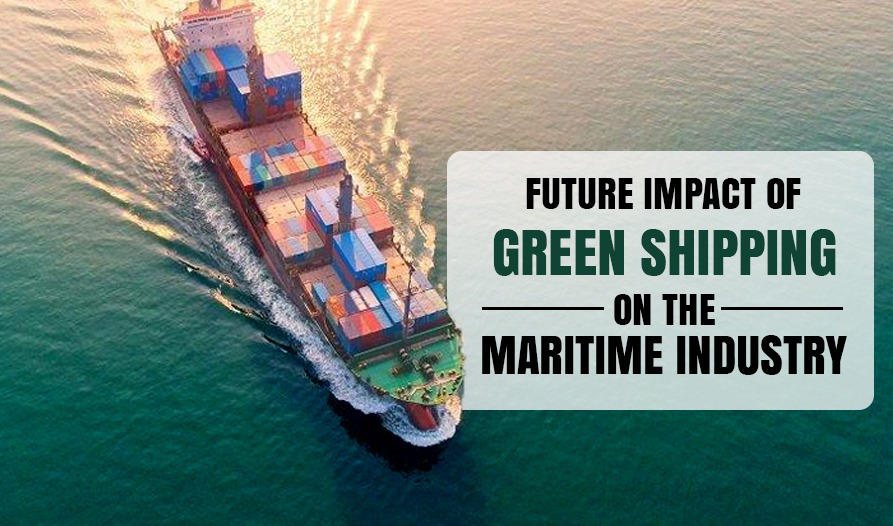
Future Impact of Green Shipping on the Maritime Industry
Future Impact of Green Shipping on the Maritime Industry
The future of shipping will be shaped by sustainability requirements. Consequently, ship owners who adapt early will gain a competitive advantage.
Several major trends are expected to influence the industry:
Increased Investment in Green Technologies
Shipping companies will continue investing in cleaner vessels and advanced technologies.
Stricter Environmental Regulations
The IMO and national authorities are likely to introduce even tighter emission standards.
Higher Demand for Sustainable Shipping Services
Customers increasingly prefer environmentally responsible logistics providers.
Digital Transformation
Smart technologies will help monitor fuel consumption, emissions, and vessel performance more accurately than ever before.
Therefore, sustainability and digitalization will work together to transform maritime operations.
How Varren Marines Shipping Supports Sustainable Shipping
As one of the leading ship management companies in India, Varren Marines Shipping is committed to supporting the future of sustainable maritime operations.
The company focuses on:
- Environmentally responsible ship management
- Fuel optimization strategies
- Operational efficiency improvements
- Regulatory compliance support
- Modern vessel management practices
By embracing innovation and sustainability, Varren Marines Shipping continues to help ship owners navigate the changing landscape of Global Shipping and International Shipping.
Conclusion
Green shipping is no longer an option—it is the future of maritime transportation. As IMO regulations become stricter, shipping companies must adopt cleaner Energy Sources, improve Energy Efficient operations, and actively work to Reduce Greenhouse Gas emissions.
Furthermore, regulations such as EEXI and Carbon Intensity requirements are encouraging the industry to become more sustainable and environmentally responsible.
For ship owners, maritime professionals, agents, and industry stakeholders, understanding these changes is essential. Those who adapt early will not only meet compliance requirements but also position themselves for long-term success in the evolving world of International Shipping.
The future of maritime transport is green, efficient, and sustainable—and the journey has already begun.