Payroll Management for Multinational Crew in the Marine Industry
Payroll Management in the Marine Industry
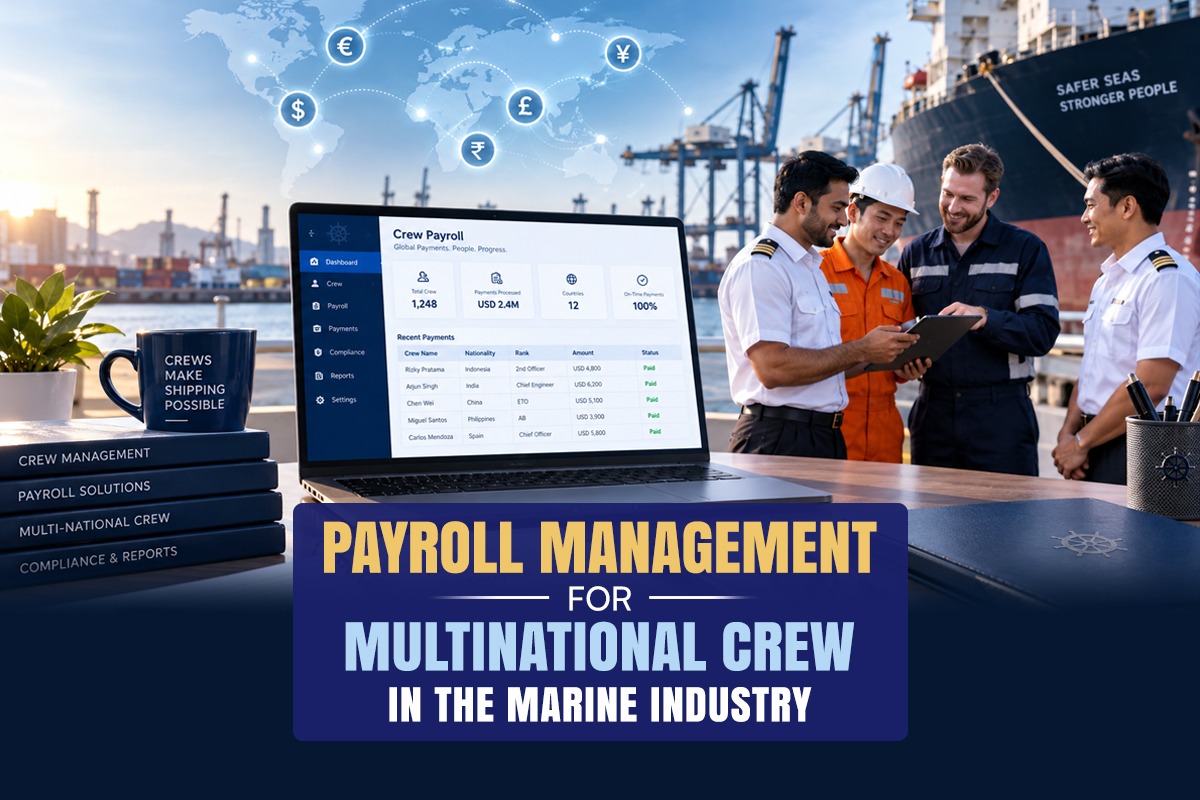
The maritime industry operates across borders, time zones and different legal systems. As a result, managing salaries for a multinational crew is much more complicated than simply calculating monthly wages. Payroll Management involves contracts, working schedules, overtime, allowances, deductions, currencies, banking, compliance and timely payments.
For Shipping Companies, ship managers and crewing agents, an efficient payroll process is therefore an important part of professional Crew Management. Moreover, accurate salary payments can improve crew satisfaction, reduce administrative errors and support better relationships between seafarers and employers.
In this article, we explain how Payroll Management for Multinational Crew works, the challenges involved and why a structured maritime payroll process is important for modern ship operations.
What Is Payroll Management for Multinational Crew?
Payroll Management for multinational seafarers means managing the complete salary and payment process for Crew Members working from different countries and serving on vessels operating internationally.
Unlike a normal shore-based workforce, seafarers may work under different employment arrangements, vessel flags, and contractual terms. Furthermore, their pay may include basic wages, overtime, leave pay, allowances, bonuses and other agreed components.
Therefore, an effective payroll process must connect crew contracts, attendance or work records, salary calculations, deductions, payment instructions and supporting documentation.
Why Payroll Management Is Important in the Marine Industry
In the Marine Industry, crew members can spend weeks or months away from their home countries. Consequently, receiving wages accurately and on time is extremely important.
The Maritime Labour Convention, 2006 establishes international standards covering areas such as employment agreements, hours of work and rest, payment of wages, repatriation and other working and living conditions for seafarers.
Therefore, payroll should not be treated as a simple accounting task. Instead, it should be part of an integrated Crew Management process that supports compliance, transparency and crew welfare.
Key Challenges in Payroll Management for Multinational Crew
1. Managing Multiple Nationalities
A vessel can have Crew Members from several countries. As a result, payroll teams may need to manage different employment conditions, currencies, tax considerations and banking arrangements.
Moreover, the employer, seafarer’s home country and vessel’s Flag State can all create different compliance considerations.
For this reason, maritime payroll requires specialist knowledge rather than a standard office payroll approach.
2. Different Salary Structures
Seafarer salaries can contain several components. Depending on the employment agreement, these may include basic wages, overtime, leave pay, bonuses, allowances and deductions.
Consequently, manual calculations can become difficult when a company manages a large fleet with multinational crew.
A structured payroll process can help standardise calculations while still allowing for differences between contracts and crew members.
3. International Payments and Multiple Currencies
International payments are another important challenge. Crew Members may need to receive salaries in different currencies or transfer money to family members in their home countries.
Furthermore, banking availability, transfer charges, exchange rates and international payment procedures can make the process more complicated.
Digital maritime payment solutions and specialised Payroll Systems can help centralise information and make payment processes easier to monitor.
4. Compliance With MLC 2006 and Other Requirements
Payroll must be aligned with applicable employment agreements and maritime requirements. MLC 2006 is particularly important because it establishes international standards concerning seafarers’ employment and working conditions, including payment of wages.
In addition, companies may need to consider requirements associated with the vessel’s Flag State, employment jurisdiction and applicable tax or social-security rules.
Therefore, payroll teams need accurate records and regular compliance checks.
How a Management System Improves Crew Payroll
Managing payroll through spreadsheets and disconnected records can increase the possibility of errors. However, a suitable Management System can bring crew information, contracts, salary details and payment records into a more organised workflow.
Modern maritime crew platforms can combine crew documentation, scheduling, compliance and payroll functions. For example, maritime software providers now offer integrated crew management and payroll modules designed for ship owners, ship managers and crewing companies.
As a result, a centralised Management System can provide better visibility and reduce repetitive administrative work.
Benefits of Effective Payroll Systems
Well-structured Payroll Systems can provide several practical benefits.
First, they can improve salary calculation accuracy. Secondly, they can make payment records easier to track. Furthermore, they can support faster communication between shore-based teams and vessels.
They can also help companies maintain records relating to contracts, allowances, deductions and payment history.
Most importantly, transparent Payroll Processing can strengthen trust between employers and Crew Members. When salaries are calculated correctly and paid on time, crew members can have greater confidence in the company managing their employment.
Payroll and Crew Management: Why They Should Work Together
Crew Management and Payroll Management are closely connected.
For example, a crew change can affect salary calculations. Similarly, contract dates, leave periods, overtime and changes in crew assignment can influence payroll.
Therefore, payroll teams should not work in isolation. Instead, payroll information should connect with recruitment, crew planning, documentation, vessel operations and finance.
This integrated approach can help Shipping Companies reduce duplication and improve communication between departments.
How Varren Marines Shipping Supports Professional Crew Management
Varren Marines Shipping is positioned as a leading Ship Management & Crew Management Company in India for the merchant navy, supporting ship owners and maritime partners through structured crew and vessel management services.
The company provides crew-related services covering recruitment and selection, training, medical requirements, flag-state services, crew planning and changes, travel, payroll and tax management, cost control, accounting, insurance and claims support, and crew performance monitoring.
Furthermore, Varren Marines Shipping operates as a DG Shipping-approved company and holds RPSL No. MUM-1026, with its website stating validity through 08/07/2029. The company also states that it is ISO 9001:2015 and MLC 2006 certified.
For ship owners, managers and crewing agents, combining experienced Crew Management with organised Payroll Management can help create a more transparent and efficient process for multinational seafarers.
Frequently Asked Questions
1. What is Payroll Management for multinational crew?
Payroll Management for multinational crew involves calculating, processing and paying salaries for seafarers from different countries while managing contracts, allowances, deductions, currencies and applicable compliance requirements.
2. Why is Crew Management important for payroll?
Crew Management provides important information such as crew contracts, joining and leaving dates, assignments and other employment details. Therefore, accurate crew information helps support correct payroll calculations.
3. What challenges do Shipping Companies face with multinational payroll?
Common challenges include multiple currencies, different nationalities, international banking, employment requirements, tax considerations, salary structures, remittances and Flag State requirements.
4. How does MLC 2006 affect seafarer payroll?
MLC 2006 establishes international standards covering seafarers’ employment conditions, including requirements relating to payment of wages. Therefore, payroll processes should be aligned with applicable MLC requirements and employment agreements.
5. What are Payroll Systems in the maritime industry?
Payroll Systems are software or structured digital solutions used to manage salary calculations, crew payment information, deductions, records and related payroll processes. Maritime-specific systems can also connect payroll with broader crew management functions.
6. Why are multiple currencies a challenge in maritime payroll?
Multinational Crew Members may be paid or receive remittances across different currencies and banking systems. Consequently, exchange rates, transfer procedures and banking charges can make international payroll more complex.
7. Can a Management System improve maritime payroll?
Yes. A suitable Management System can centralise crew information, contracts, payroll records and other operational data. As a result, it can reduce repetitive manual work and improve visibility between shore-based teams and vessels.
8. Why should companies outsource payroll management?
Outsourcing can provide access to specialised maritime payroll knowledge, structured processes and administrative support. This can be particularly useful for companies managing multinational crews across several vessels and jurisdictions.