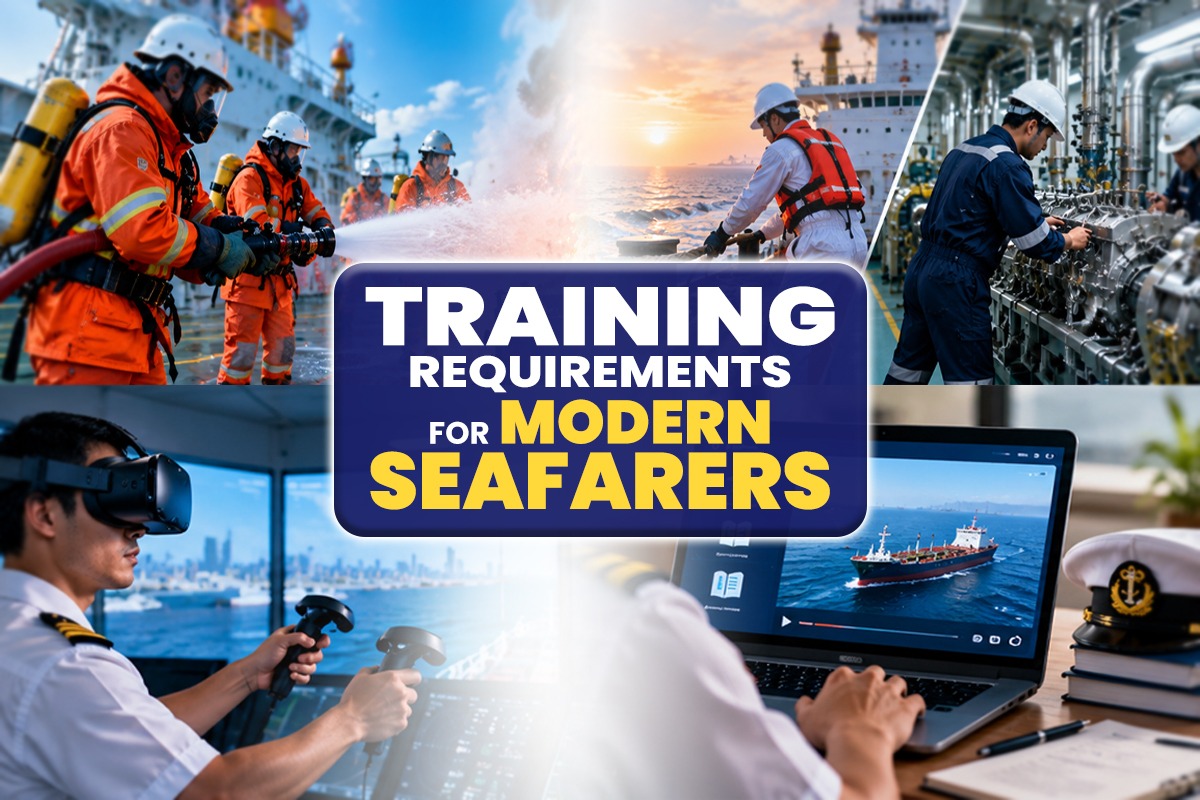
Training Requirements for Modern Seafarers
Training Requirements for Modern Seafarers
The shipping industry is changing quickly. Modern vessels use advanced navigation equipment, automated machinery, digital systems, and new technologies. Therefore, seafarers today need more than basic knowledge of ship operations. They need practical skills, updated certifications, and the ability to work confidently with modern technology.
This is why Maritime Training has become an important part of a seafarer’s career. From Basic Safety Training and Emergency Response to Digital Learning and Virtual Reality, training requirements are evolving along with the industry.
For shipping companies, ship managers, crewing agents, and individuals planning a career at sea, understanding these requirements is essential. Moreover, continuous training helps seafarers remain competent, safe, and prepared for the demands of modern shipping.
Why Training Requirements for Modern Seafarers Are Changing
The Training Requirements for Modern Seafarers are no longer limited to traditional classroom learning.
Today, ships are equipped with sophisticated navigation systems, automated machinery, digital communication tools, and advanced monitoring systems. Consequently, seafarers must understand both traditional shipboard operations and new technologies.
At the same time, international regulations continue to develop. The STCW Convention provides the global framework for minimum standards of training, certification, and watchkeeping. Its requirements cover areas such as safety, security, technology, leadership, and refresher training.
Therefore, completing one course at the beginning of a career is not enough. Seafarers need continuous learning throughout their professional journey.
Basic Safety Training Remains the Foundation
One of the most important areas of Maritime Training is Basic Safety Training.
Safety training prepares seafarers to respond correctly when something goes wrong on board. Depending on their duties and certification requirements, seafarers receive training related to personal survival techniques, firefighting, first aid, and personal safety responsibilities.
Furthermore, regular drills help turn theoretical knowledge into practical skills. Fire drills, abandon-ship exercises, and other emergency exercises allow crew members to practise their responsibilities before facing a real incident.
The IMO’s STCW framework also includes refresher training requirements for certain basic and advanced safety competencies.
Emergency Response and Practical Decision-Making
Knowing a procedure is different from being able to perform it under pressure.
Therefore, Emergency Response training should give seafarers opportunities to practise realistic situations. These may include fire, flooding, machinery failure, loss of power or other shipboard emergencies.
Regular drills can improve confidence, communication and teamwork. In addition, realistic scenario-based training can help crew members understand how quickly conditions can change during an emergency.
Maritime training providers increasingly use simulation and immersive learning to create realistic situations without exposing trainees to actual danger.
Virtual Reality Is Changing Maritime Training
Technology is also changing how seafarers learn.
Virtual Reality can create a realistic digital ship environment where trainees can explore vessel layouts, practise procedures and experience emergency situations in a controlled setting.
For example, VR can be used for:
- Bridge familiarisation
- Engine-room familiarisation
- Emergency drills
- Safety procedures
- Hazard identification
- Cargo operations
- Vessel-specific familiarisation
As a result, trainees can practise repeatedly and learn from mistakes without the risks associated with a real emergency.
However, Virtual Reality should complement practical training rather than replace actual shipboard experience. The strongest approach combines classroom learning, simulation, practical exercises and onboard training.
Digital Learning Makes Training More Flexible
Seafarers spend significant periods away from training centres. Consequently, traditional classroom-only education can sometimes be difficult to manage.
Digital Learning provides greater flexibility by allowing certain training materials to be accessed through computers, tablets, or other devices.
Online learning can support:
- Refresher training
- Technical knowledge
- Safety awareness
- Regulatory updates
- Cybersecurity awareness
- Company-specific procedures
- Pre-joining preparation
Moreover, digital platforms can help companies track training progress and identify knowledge gaps.
However, digital learning should be properly assessed. Not every subject can be effectively learned online, especially where hands-on competence is required.
Training Courses for Deck and Engine Departments
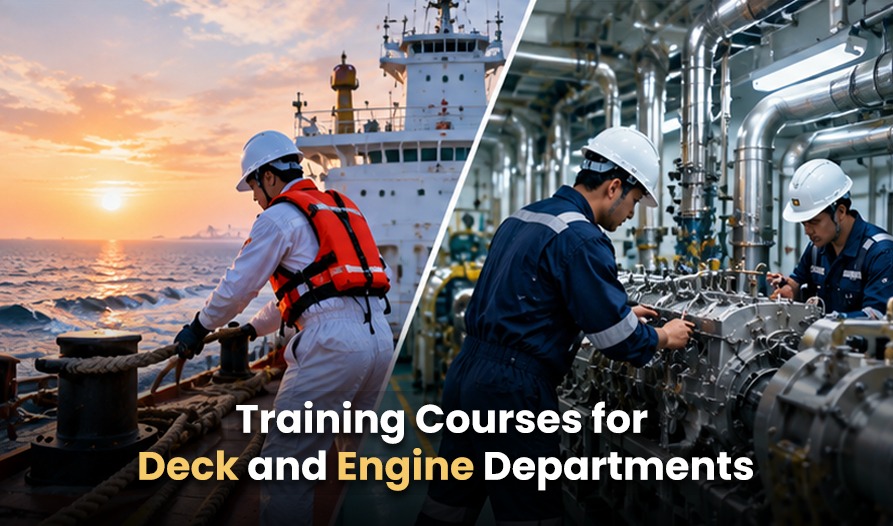
Modern seafarers need training that matches their specific responsibilities.
Deck personnel may require training related to navigation, bridge operations, cargo handling, watchkeeping, communication, and safety.
Similarly, engineers need strong technical knowledge of ship machinery and control systems. The Engine Room, in particular, requires teamwork, communication and effective decision-making because engineers may need to respond quickly to machinery failures or emergencies.
Engine-room resource management training, for example, focuses on teamwork, communication, leadership, and decision-making in complex technical situations.
Therefore, Training Courses should be selected according to the seafarer’s rank, vessel type, duties, and career goals.
Security Training Is Also Essential
Safety is only one part of modern maritime operations. Security has also become an important training area.
The STCW Convention includes requirements related to maritime security, including security training and awareness.
Depending on their role, seafarers may require different levels of Security Training. These can include security awareness, designated security duties, and Ship Security Officer training.
For example, crew members without designated security duties may need security awareness training, while personnel with specific security responsibilities may require more advanced training.
Therefore, companies should ensure that crew training matches both their duties and applicable requirements.
Continuous Training for Modern Seafarers
The most important change is that training should not stop after certification.
Modern ships are becoming more automated and digital. At the same time, regulations, equipment, and operational practices continue to change. Consequently, seafarers need regular opportunities to update their skills.
Continuous training can cover:
- New shipboard technology
- Digital systems
- Safety procedures
- Emergency response
- Cybersecurity
- Environmental requirements
- Communication and teamwork
- Leadership
- New machinery and equipment
- Vessel-specific operations
Industry training research also highlights the importance of combining technical skills, digital skills, and soft skills to prepare crews for increasingly complex operations.
How Shipping Companies Can Improve Crew Training
Shipping companies and ship managers can create stronger training programmes by first identifying the actual needs of their crews.
For example, companies can:
- Review each crew member’s certification and experience.
- Identify skill gaps.
- Match training to vessel type and job responsibilities.
- Use classroom, practical and digital methods together.
- Conduct regular drills and assessments.
- Track certification expiry dates.
- Provide refresher and technology-focused training.
- Review training results and improve programmes continuously.
As a result, training becomes part of the company’s safety and operational strategy rather than simply a compliance requirement.
Varren Marines Shipping: Supporting Professional Crew Management
Varren Marines Shipping is one of India’s leading Ship Management & Crew Management Companies for the merchant navy, supporting ship owners and maritime partners with structured crew management and vessel management services.
Effective crew management requires more than recruitment and deployment. It also involves ensuring that seafarers have the appropriate qualifications, training, documentation, and operational support for their assigned duties.
Furthermore, continuous professional development can help companies build a more competent workforce that is better prepared for modern shipboard operations.
For ship owners, managers and crewing agents, partnering with an experienced organisation can make it easier to manage crew requirements while maintaining a strong focus on safety, competence and compliance.
Frequently Asked Questions
1. What are the main training requirements for modern seafarers?
Modern seafarers need appropriate STCW certification, safety training, technical competence, security awareness, and vessel-specific familiarisation. In addition, continuous training helps them keep up with new technology, equipment, and regulations.
2. What is the STCW Convention?
The STCW Convention is the international framework that establishes minimum standards for the training, certification, and watchkeeping of seafarers. It covers areas including safety, security, technology, and other competencies required for shipboard duties.
3. Is Basic Safety Training mandatory for seafarers?
Basic Safety Training forms an important part of the STCW framework. The exact training and certification requirements depend on the seafarer’s duties, rank, vessel, and applicable administration. Seafarers should always verify current requirements with the relevant maritime administration or approved training institution.
4. How does Virtual Reality help seafarers?
Virtual Reality allows trainees to experience realistic shipboard environments and practise procedures in a controlled setting. It can be useful for bridge familiarisation, engine-room training, emergency scenarios, and safety exercises.
5. Can Digital Learning replace practical maritime training?
No. Digital Learning can support theoretical knowledge and refresher training, but practical competence often requires hands-on exercises, simulators, drills, or onboard experience. A blended approach is generally more useful.
6. What Security Training do seafarers need?
The required Security Training depends on the seafarer’s duties. STCW-related security training can include security awareness, designated security duties, and Ship Security Officer training.
7. Why is Engine Room training important?
The Engine Room contains complex machinery and systems that are essential to vessel operation. Engineers need technical knowledge as well as teamwork, communication and decision-making skills to manage normal operations and emergencies effectively.
8. Why is continuous Maritime Training important?
Continuous Maritime Training helps seafarers maintain competence as technology, regulations, equipment, and operational practices change. It also supports safety, emergency preparedness, and professional development.